
I Muted WhatsApp Groups for a Week and My Anxiety Dropped
A one-week experiment with 'Always Mute' settings revealed that silencing the chatter of family and work groups was the only way to reclaim my focus and lower my baseline stress.

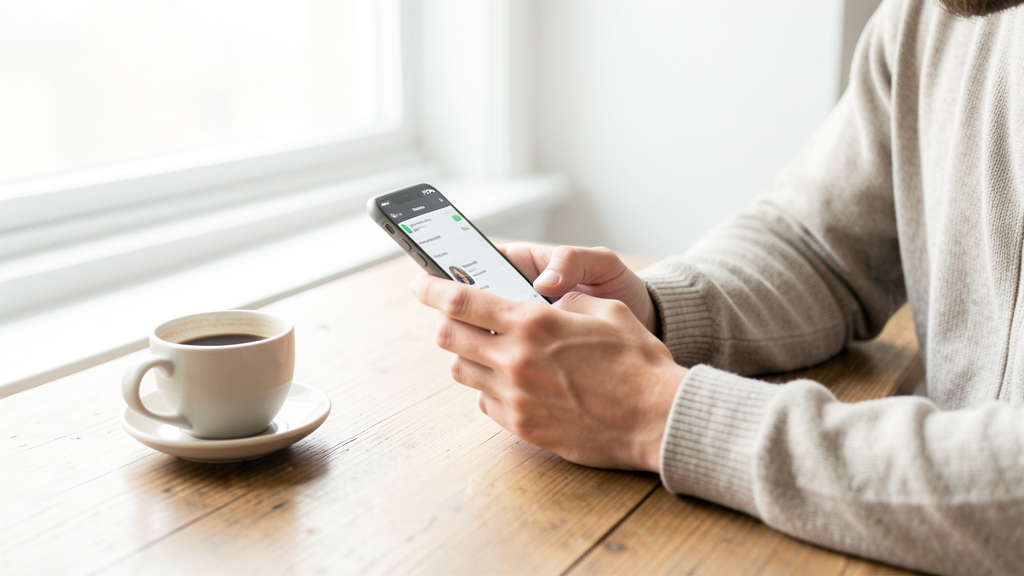
It was 11:42 PM on a Tuesday in March 2026 when I felt the familiar buzz against my thigh. I was trying to wind down, but my phone lit up the dark room. It was the "Marketing Team Alpha" group. Someone had dropped a file labeled Q2_Forecast_v3_FINAL_final.pdf with no accompanying message. Just the file. Within seconds, three reaction bubbles popped up, followed by a "Thumbs up" from my boss. The screen didn't turn off for two minutes.
My heart rate spiked. I wasn't on call. I didn't need to see that PDF until 9 AM the next day. Yet, the mere sight of the notification triggered a cascade of cortisol. I laid in bed, staring at the ceiling, realizing my Pavlovian response to the green notification LED was ruining my sleep.
As a Lead Configuration Analyst, I spend my days optimizing digital workflows for others. Yet, my personal digital hygiene was a disaster. I was part of 47 active WhatsApp groups. Between the extended family arguing about politics, the gym buddy spamming workout selfies, and the relentless pings from cross-functional work teams, the noise was constant.
I decided to run a one-week experiment. I wouldn't leave the groups—social capital is expensive, and I need these connections. Instead, I would weaponize the "Mute" function to see if silencing the noise could actually lower my anxiety. I started on a Wednesday. By Sunday, the results were profound.
The Sunday Night Reset That Triggered The Change
The decision wasn't spontaneous. It came after a specific incident on Sunday, March 15th. I was attempting to read a physical novel, something I hadn't done in months. Every three pages, a "ding" interrupted my flow. The worst offender was "The Costa Family Reunion 2026" group. My aunt and uncle were engaged in a heated debate about the catering menu, sending voice notes back and forth.
I caught myself gritting my teeth. I wasn't even angry at them; I was angry at the intrusion. I realized I was living in a state of continuous partial attention, waiting for the next interruption. My brain had lost the ability to be bored, and consequently, it had lost the ability to be deeply focused.
I opened the group info. I saw the standard options: Mute for 8 hours, 1 week, or 1 year. I had used the "8 Hours" option before, but it’s a trap. It implies that after 8 hours, the notifications will be relevant. They never are. The conversation just moves on to a different topic. Choosing "1 Year" felt permanent, scary, and slightly rude.
For this experiment, I chose the nuclear option: "Always." I wanted to know what life felt like when I assumed nothing in a group chat required immediate attention.
Why "Mute 8 Hours" is a Placebo
Most users treat "Mute" like a snooze button. You silence the alarm because you can't deal with it right now, but you know you have to deal with it when the sound returns. This keeps the cognitive load active. Your brain knows there is a backlog of messages waiting for you.
When I muted the "Project Chimera Updates" group for 8 hours previously, I would find myself checking the app manually anyway, scared I missed a deadline. It was a placebo. I was still checking, just without the auditory cue.
For the experiment, I applied "Always Mute" to everything except two specific contacts: my mother and my direct manager. If my house was on fire or I was fired, they could call or text individually. Everyone else went into the silent void. I also disabled notification previews on the lock screen so that even if I glanced at the phone, I saw "WhatsApp: 2 new messages" instead of "Sarah: Did you see what he said?"
I had previously considered switching platforms to escape the noise, analyzing tools like Signal for better group management. While I looked at Signal vs. WhatsApp: Why You Should Switch for Group Chats for technical comparisons on encryption and group limits, switching wasn't the issue. The issue was my relationship with the inbound notification stream. I had to fix the behavior, not the tool.
The Withdrawal Phase: Days 1 and 2
The first 48 hours were unsettling. I work remotely, so WhatsApp doubles as our office water cooler. On Wednesday morning, my phone was silent. Too silent.
I experienced phantom vibrations. I would look down at my pocket, convinced I felt a buzz, but the screen was black. This is a documented symptom of digital addiction. My brain was searching for the dopamine hit it was used to.
Around noon on Day 2, I caved. I opened WhatsApp. The "Project Chimera" group had 142 unread messages. A wave of nausea hit me. I scrolled through two hours of memes, complaints about the coffee machine, and a brief three-minute window where they actually discussed the server migration I needed to know about.
I realized then that muting was only half the battle. I needed a strategy to consume this information asynchronously without the fear of missing out (FOMO). I needed to trust that if something was truly critical, it wouldn't be buried in a group chat. It would be a direct message or a call.
The Shift: From Receptor to Reader
By Day 4, the anxiety began to subside. I was no longer reactive. I became a reader of my own life rather than a reactor to it.
I scheduled three specific times to check the muted groups: 10 AM, 2 PM, and 5 PM. I treated these like email. I would open the app, scan the bold text, and mark as read. If a group had more than 50 messages, I made a calculated decision to skip them entirely. If it was important, it would be summarized later.
The effect on my work was immediate. I finished a configuration audit that had been lingering on my to-do list for three weeks. The difference wasn't that I worked harder; it was that I stopped working in fragments.
Socially, the dynamic changed too. My cousin messaged me directly on Thursday: "Hey, are you okay? You aren't reacting to the memes in the family group." I explained my experiment. Surprisingly, he didn't get mad; he said he wished he could do the same. This interaction made me realize that everyone hates the constant noise, but no one wants to be the first to step away.
To further reduce the feeling of being "always on," I coupled the WhatsApp muting with hiding my online status elsewhere. I implemented the method to Hide Your Online Status on Instagram (Even From Close Friends) to remove the pressure to be instantly available across all platforms. This created a unified front of digital unavailability.
The Trade-Offs: What I Actually Missed
I want to be honest about the downsides. Because there were some.
On Saturday, I missed a spontaneous plan to go to the movies. A friend organized a trip to see the new blockbuster in the "Weekend Crew" group. Since I was only checking at 2 PM and they organized it at 11 AM, by the time I replied, the tickets were sold out.
I felt a pang of exclusion. But then I analyzed it. Had the notification popped up, I would have been stressed about deciding whether to go, feeling guilty about the work I wasn't doing, or anxious about the money. Missing out was annoying, but it wasn't fatal.
There was another miss in the "Building Security" group. They announced the elevator would be down for maintenance on Monday morning. I didn't see it until Monday at 9 AM, just as I was walking out the door. I had to take the stairs down 12 floors with my bike. It was annoying, but it was a minor inconvenience compared to the 40 hours of low-level anxiety I had avoided.
Verification: Ensuring the Settings Hold
As a configuration analyst, I know that settings can reset or glitch. To ensure my mental health improvement wasn't jeopardized by a software update, I implemented a verification routine every Friday morning.
You must verify that your silence is actually active. Here is how I check it:
- Open the WhatsApp Chats tab.
- Locate the most active group. You will see the Muted icon (a bell with a slash through it) next to the group name.
- Long-press the group and tap the three vertical dots in the top right corner, then select "Group info."
- Check "Mute notifications." Ensure it is set to "Always" and verify that the "Notify anyway" toggle is OFF (unless you want to be safe for specific keywords, which I don't recommend).
- System Level Check: Go to your phone's main Settings > Apps > WhatsApp > Notifications. Ensure that "Notification Categories" for Group Calls is set to "Low Importance" or "Silent."
This verification step ensures that an errant OS update or an accidental tap doesn't suddenly flood your lock screen with noise again. It is a maintenance task for your sanity.
The Silent Protocol: A New Normal
It has been two weeks since my initial seven-day experiment ended. I have not turned the notifications back on.
My anxiety hasn't just dropped; it has qualitatively changed. It is no longer that buzz of static electricity under my skin. I feel a sense of spaciousness. I can sit with my own thoughts without being interrupted by a GIF of a dancing cat.
The most significant realization was that the world did not end because I didn't reply within 30 seconds. The work still got done. My family still loves me. The friends in the "Weekend Crew" just tag me in direct messages now if they need a headcount.
This brings up an interesting point about audience and intent. When you hide your activity, you change how people interact with you, much like understanding What Does "Undo Send" Actually Do on iMessage?. These features give us control over the digital footprint we leave and the expectations we set. Muting groups is the ultimate exercise in setting boundaries.
If you are feeling that crushing weight in your chest every time your phone vibrates, try "Always Mute" for just 72 hours. Don't check it at red lights. Don't check it on the toilet. Let the messages stack up. Watch them turn from urgent information into obsolete digital dust. You might find, like I did, that the silence is the loudest, clearest sound you’ve heard in years.
I realized that 4 Myths About Who Sees Your Facebook Story Audience are similar to the myths we tell ourselves about group chats: that everyone needs to see everything instantly. They don't. You don't.
The final takeaway isn't about technology. It is about agency. I reclaimed the right to determine when I engage with the world, rather than letting a green bubble dictate my emotional state. The anxiety didn't drop because the noise stopped; it dropped because I finally proved to myself that I was the one holding the volume knob.
Read next
Signal vs. WhatsApp: Why You Should Switch for Group Chats
Stop leaking your social graph to advertisers by moving your communities to Signal, where encryption safety and metadata retention are handled correctly.
Disabling the Green Dot: A 2026 Guide to Instagram Privacy
Stop the pressure of immediate replies by learning exactly where Instagram buried the 'Show Activity Status' toggle in the 2026 interface update.